Showing posts with label History. Show all posts

What Does Armistice Mean? Understanding the Pause in History’s Wars

Imagine soldiers finally laying down their weapons, flags waving in relief, and the long-awaited silence after years of conflict. The word armistice is at the heart of these moments—a term that carries the promise of peace, even if temporary. But what does it really mean, and why do we still remember it today?

Soldiers shaking hands on a battlefield to symbolize an armistice.


What Is an Armistice?

An armistice is a formal agreement between warring parties to stop fighting. Unlike a full peace treaty, it doesn’t end the war officially—it just halts the violence for a period of time. Think of it as hitting “pause” on a conflict.

Key points to understand:

  • It is temporary and can be broken if either side resumes hostilities.

  • It often leads to negotiations for a longer-lasting peace treaty.

  • Armistices can involve specific rules, like troop withdrawals or the establishment of neutral zones.

Did You Know?

The most famous armistice is the one signed on November 11, 1918, marking the end of fighting in World War I. It was signed at 11 a.m.—hence Armistice Day, which later became Veterans Day in the U.S.


History Behind the Word

The term armistice comes from the Latin words arma (weapons) and stitium (a stopping). Essentially, it means a “stopping of arms.” Historically, rulers and generals used armistices to pause battles while negotiating treaties or to allow humanitarian efforts, like exchanging prisoners.

Other notable examples include:

  • The Korean War armistice in 1953, which technically ended fighting but didn’t conclude the war officially.

  • Regional conflicts in Europe during the 18th and 19th centuries, where armistices allowed temporary peace to avoid full-scale destruction.


Common Questions About Armistice

Q: Is an armistice the same as peace?

A: Not exactly. Peace usually comes with a treaty that resolves all issues, while an armistice only stops active fighting.

Q: Can armistices fail?

A: Yes. Since they are temporary agreements, hostilities can resume if negotiations fail or one side violates the terms.


Learning about armistices makes me realize how fragile and valuable peace can be. Even a temporary stop in fighting can save countless lives and create opportunities for understanding. It reminds me that compromise and communication are powerful tools—not just in wars but in daily life as well.

An armistice represents a pause in conflict, offering a moment for reflection, negotiation, and sometimes lasting peace. Understanding these agreements helps us appreciate history’s turning points and the importance of striving for resolution. What do you think is the most significant armistice in history? Share your thoughts below!

When Is Columbus Day 2025? Everything You Need to Know

Have you ever paused to wonder why we celebrate Columbus Day, or when it actually falls each year? If you’re planning a long weekend or just curious about the holiday calendar, knowing when Columbus Day 2025 lands is key. Let’s dive in and uncover the details behind this often-debated holiday.

Columbus Day parade in the U.S. with floats, Italian-American flags, and people celebrating in autumn sunlight

What Is Columbus Day?

Columbus Day commemorates the landing of Christopher Columbus in the Americas on October 12, 1492. While it’s a federal holiday in the United States, its meaning and celebration vary widely. Some see it as a moment to honor Italian-American heritage, while others focus on the broader history of European exploration.

Here are some quick facts:

  • Columbus Day became an official federal holiday in 1937.

  • It is observed on the second Monday of October each year.

  • Many states and cities celebrate Indigenous Peoples’ Day instead, acknowledging the impact on native populations.

  • Schools, banks, and federal offices often close for the day.

  • It’s also a popular day for parades and cultural events, particularly in cities with strong Italian-American communities.

When Is Columbus Day 2025?

Mark your calendars! Columbus Day 2025 will fall on Monday, October 13. This date follows the longstanding tradition of celebrating the holiday on the second Monday in October, giving Americans a nice three-day weekend to enjoy.

This timing is consistent every year, though the actual anniversary of Columbus’s landing is October 12. The Monday observance simply makes it easier for businesses and schools to schedule around the holiday.

Why Is Columbus Day Controversial?

Not everyone agrees on celebrating Columbus Day. The holiday has sparked debates over historical accuracy and cultural sensitivity. Here’s why:

  • Columbus’s arrival marked the beginning of European colonization, which had devastating effects on indigenous populations.

  • Some argue the holiday glorifies conquest rather than acknowledging its consequences.

  • Indigenous Peoples’ Day has gained traction as an alternative, honoring native history and resilience.

  • Schools and institutions sometimes teach both perspectives to provide a fuller historical context.

Understanding these nuances can make your Columbus Day observance more thoughtful, whether you celebrate or reflect on history.

How Do People Celebrate Columbus Day Today?

Celebrations vary depending on region and personal preference. Here are common ways Americans observe the holiday:

  • Parades and festivals: Cities like New York and San Francisco hold large Italian-American parades.

  • Educational programs: Schools may teach students about Columbus, exploration, and indigenous history.

  • Family gatherings: Some families use the long weekend to enjoy time together.

  • Travel and leisure: A three-day weekend often means trips, outdoor activities, or just relaxing.

  • Cultural exhibits: Museums may host events highlighting the era of exploration.

Even if you don’t have a parade nearby, Columbus Day 2025 is a chance to explore history and heritage in small, meaningful ways.

Did You Know?

  • Columbus wasn’t the first European to reach the Americas; Norse explorer Leif Erikson arrived centuries earlier.

  • In 1971, Congress officially fixed Columbus Day on the second Monday of October.

  • Some U.S. states, like Hawaii and South Dakota, celebrate entirely different holidays on the same day.

  • The holiday has inspired art, literature, and even coins featuring Columbus.

I’ve always found it interesting how one day can hold so many meanings depending on who you ask. Personally, I like using Columbus Day as a chance to explore history critically—learning about the explorers and also the indigenous stories that often get overlooked. It makes the holiday feel richer and more thoughtful.

So, if you’re wondering when Columbus Day 2025 falls, now you know: Monday, October 13. Whether you’re planning a long weekend, attending a parade, or reflecting on history, it’s a day worth noticing. How do you usually spend Columbus Day—celebrating, learning, or both?

Why Rome Is Called The Eternal City: Secrets Behind Its Timeless Legacy

What does it take for a city to earn the nickname The Eternal City? Rome didn’t just stumble upon it—it earned that title through thousands of years of influence, survival, and reinvention. From emperors and gladiators to popes and pizza, this ancient metropolis has stood the test of time in ways few places on Earth ever could.


What Is the Eternal City?

When people talk about “The Eternal City,” they’re referring to Rome, Italy—a city that has been continuously inhabited for over 2,700 years. The nickname comes from the Latin phrase Roma Aeterna, which ancient Romans used to express their belief that Rome would last forever.

Panoramic view of Rome at sunset featuring the Colosseum and St. Peter’s Basilica, representing the timeless beauty of The Eternal City.

Rome’s enduring power wasn’t just political—it was spiritual, cultural, and architectural. Even after the fall of the Roman Empire, the city continued to shine as a beacon of art, religion, and history. Today, its mix of ancient ruins and modern life makes it a living museum unlike any other.


How Did Rome Earn Its Eternal Title?

The phrase “The Eternal City” first appeared in ancient Roman literature. Roman poets like Tibullus and Ovid wrote about Rome’s everlasting greatness during the first century BCE. To them, the empire might change, but Rome—the heart of civilization—would never die.

Here’s why the nickname stuck:

  • Unbroken history: Rome has been continuously inhabited since 753 BCE.

  • Enduring influence: Roman law, language, and architecture shaped Western civilization.

  • Spiritual power: As the center of the Catholic Church, it remains a global religious hub.

  • Cultural rebirths: The Renaissance and Baroque periods both revived Rome’s grandeur.

  • Tourist magnet: Millions still visit each year to walk the same streets as emperors once did.


What Makes Rome Feel So Eternal?

Step into Rome and you’ll understand why the name fits. The city feels like time has folded in on itself. One moment you’re sipping espresso in a trendy café; the next, you’re staring at the Colosseum—a structure that’s almost two millennia old.

A few timeless landmarks make this feeling unforgettable:

  • The Colosseum: Once home to gladiatorial battles, it’s now a symbol of resilience.

  • The Pantheon: A temple turned church, it’s still in use after 1,900 years.

  • The Roman Forum: The political heart of ancient Rome still whispers history.

  • St. Peter’s Basilica: A Renaissance masterpiece that continues to draw pilgrims.

  • The Trevi Fountain: Toss in a coin, and legend says you’ll return to Rome—another nod to its eternal nature.


Is “The Eternal City” Just About the Past?

Not at all. Rome’s eternity isn’t just about what’s old—it’s about how it keeps evolving. The city constantly reinvents itself without losing its soul.

Today’s Rome is:

  • A creative capital: Designers, filmmakers, and chefs continue to redefine Italian style.

  • A living contrast: Ancient ruins coexist with modern art galleries and electric scooters.

  • A culinary destination: From traditional trattorias to experimental fusion, food here never stops evolving.

  • A city of festivals: Events like Festa della Repubblica and Rome Film Fest blend history with modern energy.

Rome proves that being eternal doesn’t mean staying frozen in time—it means thriving across centuries.


What Does “The Eternal City” Mean to the World Today?

For many, Rome represents the idea that beauty, culture, and human achievement can outlast chaos and change. It’s a reminder that even after wars, empires, and revolutions, creativity and faith endure.

This symbolic meaning has inspired everything from Renaissance art to modern movies. And when people call Rome The Eternal City, they’re really saying: some things are simply too powerful to fade away.


The first time I saw Rome, I was struck by how alive it felt. Street musicians played near ruins older than my country. Locals chatted over cappuccinos beside marble columns that once held up temples. It’s one of the few places where history doesn’t feel distant—it walks right beside you.

Rome truly lives up to its nickname, The Eternal City. Its layers of history, faith, and artistry have survived centuries of change and continue to shape the modern world. Have you ever visited Rome—or is it still on your travel bucket list?

Where Is the Statue of Liberty?

On a clear day, you can spot her torch from miles away, but pinning down her exact location is trickier than most people realize. The Statue of Liberty isn’t just “in New York.” The details of where she actually stands have sparked debates, court cases, and a few fun misconceptions over the years.


The Statue’s Exact Spot

The Statue of Liberty stands on Liberty Island in New York Harbor. It rises near the mouth of the Hudson River, just off the southern tip of Manhattan.

Where Is the Statue of Liberty?

Here’s the twist: while everyone associates the statue with New York City, the waters around Liberty Island actually belong to New Jersey. The U.S. Supreme Court had to settle this boundary dispute in 1998, confirming that the island itself is New York territory—but everything surrounding it is New Jersey.


How Did the Statue Get There?

France gifted the Statue of Liberty to the United States in 1886 as a symbol of friendship and freedom. Once shipped across the Atlantic, she was assembled piece by piece on Liberty Island (then called Bedloe’s Island).

  • The statue arrived in 350 separate parts.

  • It took four months to put her together.

  • Gustave Eiffel—the same engineer behind the Eiffel Tower—designed the iron framework inside.

  • The original torch was replaced in 1986 because it had corroded.


Why Liberty Island?

So why plant this monumental gift on a small island instead of right in Manhattan? The location was strategic. Ships from Europe entered New York Harbor first, so placing the statue there turned her into a symbol of welcome for immigrants arriving in America.

Back in the 19th century, Bedloe’s Island already held a military fort. The U.S. government agreed to repurpose the site, turning it into the pedestal for Lady Liberty.


Can You Visit the Statue of Liberty?

Yes—and millions do every year. Ferries run daily from Battery Park in Manhattan and Liberty State Park in New Jersey.

Visitors can:

  • Explore Liberty Island and its museum.

  • Climb up to the pedestal for sweeping harbor views.

  • With special tickets, hike all the way into the crown (357 steps!).

  • See Ellis Island nearby, where over 12 million immigrants first set foot in America.


Where Is the Statue of Liberty on a Map?

Pull out a map and you’ll find Liberty Island just south of Manhattan, about half a mile from New Jersey’s shoreline. From above, the statue faces southeast, looking out toward the Atlantic Ocean. That placement was intentional—her gaze is fixed outward, symbolizing a nation welcoming newcomers.


Fun Facts About the Statue’s Location

  • The statue straddles two states in spirit: New York owns the land, New Jersey owns the water.

  • Liberty Island covers just 14.7 acres—smaller than many city parks.

  • The statue’s height from ground to torch is 305 feet, roughly the same as a 22-story building.

  • On a clear day, you can see her from Brooklyn, Staten Island, and even parts of Jersey City.


Personal Insight

I remember riding the ferry for the first time and feeling surprised by how small the island was compared to the statue’s size. Standing at her base, you get the sense that she dominates the entire harbor, almost like a guardian. Photos never really capture that presence—you have to see it in person.


Conclusion

The Statue of Liberty may be famous worldwide, but her exact home is Liberty Island in New York Harbor, a small patch of land technically part of New York but surrounded by New Jersey waters. Her location was chosen with purpose—to welcome arrivals by sea, to symbolize freedom, and to be seen by all who entered the harbor.

Now that you know, does it change how you picture her place on the map?

Who Is America Named After? The Surprising Story Behind the Name

The name “America” might sound like it’s been around forever, but it actually comes from a very specific moment in history. Imagine a mapmaker in the early 1500s, deciding what to call a newly charted land. One choice, one name, and suddenly an entire continent had its identity.


Who Is America Named After?

America is named after Amerigo Vespucci, an Italian explorer who sailed across the Atlantic in the late 15th and early 16th centuries. Unlike Christopher Columbus, who believed he had reached Asia, Vespucci realized these lands were part of a “New World.”

Who Is America Named After? The Surprising Story Behind the Name

A German cartographer, Martin Waldseemüller, published a famous world map in 1507. On it, he labeled the new continent “America” after the Latinized version of Vespucci’s first name, Americus. That map was widely circulated, and the name stuck.


Why Amerigo Vespucci and Not Columbus?

It might seem odd that Columbus didn’t get naming rights, since he’s often credited with “discovering” the Americas. But timing, reputation, and interpretation all played a role.

  • Vespucci published letters describing his voyages, which convinced Europeans the new lands weren’t Asia.

  • Waldseemüller relied on Vespucci’s accounts when creating his map.

  • Columbus died still believing he had found islands near Asia, not a brand-new continent.

In a way, Vespucci was the better storyteller. His vision of a “New World” helped reshape how Europeans saw geography.


Fun Facts About the Name “America”

  • Waldseemüller’s 1507 map is sometimes called the “birth certificate of America.”

  • At first, the name only applied to South America. Over time, it expanded to North America as well.

  • In 1538, another cartographer, Gerardus Mercator, helped spread “America” further by applying it to the entire Western Hemisphere.

  • There was once a debate about renaming the continent to honor Columbus instead, but by then “America” was already too popular.

  • The U.S. adopted “United States of America” officially in 1776 when declaring independence.


Could America Have Been Named Something Else?

Yes—and history could have sounded very different! A few alternatives were considered in the early years:

  • Columbia – a poetic name inspired by Columbus (still used in places like Washington, D.C. and Colombia).

  • New World – more descriptive, but too vague to stick.

  • Atlantis – occasionally referenced in early writings, linking the land to myths of a great western continent.

In the end, Waldseemüller’s choice outpaced the rest, simply because his map circulated widely across Europe.


What About Native Names?

Before Europeans arrived, the lands we now call “America” had countless names given by the Indigenous peoples who lived here for thousands of years. For example:

  • The Lenape called their homeland Lenapehoking.

  • The Haudenosaunee referred to their confederacy as Haudenosaunee, meaning “People of the Longhouse.”

  • The Mexica (Aztecs) called their empire Anahuac.

These names reflected deep cultural ties and histories. Sadly, they were largely erased from global maps when Europeans imposed their own labels.


Personal Insight

I’ve always found it fascinating that such a massive part of our identity came down to a mapmaker’s decision over 500 years ago. If Waldseemüller had chosen differently, we might be living in the “United States of Columbia” today. Honestly, “America” just feels right—it’s hard to imagine it any other way.


Conclusion

So, who is America named after? The answer is Amerigo Vespucci, the explorer who helped Europeans realize they had stumbled onto a new continent. Thanks to one influential map, his name became attached not only to two continents but also to one of the most powerful countries in the world.

What do you think—does “America” feel like the perfect name, or can you imagine us being called something else?

What Is Gen X? The Forgotten Middle Child of Generations

They’re not Boomers, not Millennials, and definitely not Gen Z. Gen X often slips through the cracks of cultural conversation, but this so-called “forgotten generation” has shaped everything from music to technology. So what is Gen X, really, and why does it deserve more attention?


Who Exactly Is Gen X?

Generation X usually refers to people born between 1965 and 1980. They came after the Baby Boomers and before Millennials. Some researchers stretch the years slightly, but that mid-1960s to early 1980s window is the sweet spot.

What Is Gen X? The Forgotten Middle Child of Generations

Gen X is known for its independence. Many grew up with two working parents or in single-parent households, which meant spending a lot of time on their own. That’s where the nickname “latchkey kids” came from—children carrying house keys on a string around their necks, letting themselves in after school.


What Shaped Gen X?

The world looked very different during their childhood and teen years:

  • The Cold War loomed in the background.

  • MTV launched in 1981, transforming music and pop culture.

  • Personal computers started appearing in homes.

  • The 1970s and ’80s recessions created financial uncertainty.

  • Pop culture icons like Star Wars, punk rock, and hip-hop defined youth identity.

Growing up in a mix of analog and early digital worlds gave Gen X a unique perspective—they understand life without the internet, but they also adapted to it quickly.


What Is Gen X Known For?

Gen X has a reputation for being practical, skeptical, and resourceful. Unlike the larger generations on either side, they didn’t grow up expecting the world to revolve around them.

  • They witnessed the shift from typewriters to laptops.

  • They learned to use a payphone, then adapted to cell phones.

  • They’re credited with kickstarting the grunge movement and alternative culture in the ’90s.

  • Many became pioneers in the early days of the internet and tech startups.

If Millennials are digital natives and Boomers are analog loyalists, Gen X sits right in the middle—digital immigrants who made the leap and helped everyone else follow.


Why Does Gen X Get Overlooked?

One reason is sheer numbers. Baby Boomers and Millennials are massive generations with huge cultural weight. Gen X is smaller—about 65 million in the U.S., compared to over 70 million Millennials and 70+ million Boomers.

On top of that, Gen X is less vocal. They didn’t grow up with social media, so they weren’t conditioned to broadcast every thought. They’re often called the “forgotten generation” because they quietly worked, raised families, and kept the machine running without demanding much attention.


What Is Gen X’s Legacy?

Even if they don’t get the spotlight, Gen X has left fingerprints everywhere.

  • They pushed diversity and inclusivity in media.

  • They made hip-hop, punk, and alternative rock mainstream.

  • They were the first generation to embrace work-life balance, valuing flexibility over rigid corporate ladders.

  • They bridged the gap between an analog childhood and a digital adulthood.

Their adaptability may be their greatest legacy. Few groups have learned, unlearned, and relearned as much as Gen X.


Personal Insight

I’ve always admired Gen X for their balance. They’re tech-savvy without being glued to a screen, nostalgic without being stuck in the past. To me, they’re proof that you can roll with big cultural shifts and still keep your sense of humor intact.


Conclusion

So, what is Gen X? It’s the generation that grew up with mixtapes, survived dial-up internet, and quietly reshaped culture while bigger groups grabbed the headlines. They might be overlooked in conversation, but their impact is everywhere.

Do you think Gen X gets enough credit for shaping today’s world?


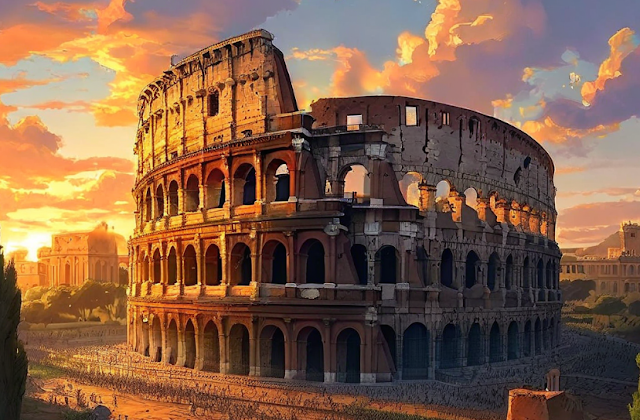
🏛️ How Old is the Colosseum? Uncover the Secrets of Ancient Rome!

When we think of ancient Rome, the mighty Colosseum instantly comes to mind. But exactly how old is the Colosseum? Let's journey through time and reveal the fascinating history behind one of the world’s most iconic structures.

🏛️ How Old is the Colosseum?


📜 The Birth of the Colosseum: A Gift to the Roman People

The Colosseum, also known as the Flavian Amphitheatre, began construction in 70 AD under Emperor Vespasian. It was later completed in 80 AD by his son, Emperor Titus, with final touches added during the reign of Emperor Domitian.

This means that the Colosseum is nearly 2,000 years old — a staggering testament to Roman engineering! Built on the site of Emperor Nero’s former palace, the Colosseum was a grand symbol of Rome’s shift from tyranny to a republic that honored its people.


🏗️ How Long Did It Take to Build the Colosseum?

The construction of the Colosseum took roughly a decade. It was a massive project requiring thousands of workers, including skilled Roman engineers, artisans, and slaves.

Interestingly, the Colosseum was built with a combination of travertine limestone, volcanic rock, and concrete — materials that have helped it withstand the test of time.


🎟️ What Was the Purpose of the Colosseum?

Once completed, the Colosseum became the epicenter of Roman entertainment. It could seat between 50,000 to 80,000 spectators who came to witness:

  • Gladiator battles

  • Wild animal hunts

  • Mock naval battles

  • Public executions

  • Dramatic reenactments

These grand spectacles showcased the might and wealth of the Roman Empire, solidifying the Colosseum's place in history.


⌛ The Colosseum Through the Centuries

Though the Colosseum has endured earthquakes, stone robbers, and even bombings during World War II, it remains a powerful symbol of resilience. Restoration efforts have kept its spirit alive, attracting millions of tourists every year.

Today, at nearly 2,000 years old, the Colosseum continues to tell the story of Rome’s glorious and tumultuous past.


🏺 Final Thoughts: The Colosseum is Timeless

So, how old is the Colosseum? Officially, it's around 1,945 years old as of 2025. But its grandeur feels eternal, as fresh and awe-inspiring today as it must have been to the Romans nearly two millennia ago.

If you ever get a chance to stand within its towering arches, you'll not just be visiting a site — you’ll be stepping into history itself.

📜 Letters from an American: A Modern Chronicle of Democracy in Real Time

Letters from an American is more than just a newsletter—it's a daily historical commentary that bridges the gap between current events and the deeper roots of American democracy. Authored by Heather Cox Richardson, a respected historian and professor, the newsletter has become a vital source of insight for citizens eager to understand the political shifts shaping the United States.

📜 Letters from an American


🖊️ What is Letters from an American?

At its core, Letters from an American is a newsletter written by a historian, offering a unique blend of academic rigor and accessible narrative. Launched in 2019 on Substack, it quickly gained traction for its ability to contextualize modern politics within America’s long and often complex history.

Unlike typical news coverage, Richardson’s letters focus on what events mean, rather than just what happened. This approach invites readers to reflect on the enduring themes of American governance, such as freedom, justice, and constitutional integrity.


🧠 Why Heather Cox Richardson’s Voice Matters

Heather Cox Richardson is not just a historian—she is a trusted interpreter of American history. With a Ph.D. from Harvard and numerous books to her name, her expertise in political ideology, reconstruction, and the rise of authoritarianism gives her writing a depth that resonates with modern readers.

In each letter, Richardson draws parallels between past and present, providing historical context for everything from Supreme Court rulings to presidential decisions. Her ability to dissect complex issues and connect them to foundational American values makes her work essential for anyone who values democracy.


📬 The Impact of Letters from an American

The newsletter reaches hundreds of thousands of subscribers daily and has become a staple in civic education. Teachers assign it. Citizens quote it. Politicians read it.

Its success lies in its clarity and commitment to nonpartisan truth-telling. In a world filled with misinformation and sensationalism, Letters from an American serves as a beacon of factual storytelling, offering readers a way to stay informed without feeling overwhelmed.


📈 Benefits of Following This Newsletter

If you're managing a blog or platform centered around American politics, history, or current events, referencing or linking to Letters from an American can enhance your content's authority and trustworthiness. Why?

  • It boosts your site's relevance in queries about modern American political analysis.

  • It aligns with high-intent keywords like "American democracy today", "Heather Cox Richardson newsletter", and "history behind U.S. politics".

  • It connects your audience to a credible source, improving engagement and SEO ranking through outbound authority links.


🧭 Where to Read Letters from an American

You can find Letters from an American on Substack, where it’s free to subscribe. Paid subscribers also get exclusive posts and Q&As. The archive is searchable, making it a rich resource for students, researchers, and concerned citizens alike.

🌐 Visit heathercoxrichardson.substack.com to explore the archives and join a growing community of informed readers.

✊📜 Letter from Birmingham Jail: A Timeless Call for Justice and Nonviolence

Dr. Martin Luther King Jr.'s "Letter from Birmingham Jail" remains one of the most powerful texts in the history of the American Civil Rights Movement. Written in April 1963, this eloquent and passionate letter not only defended the strategy of nonviolent resistance to racism but also addressed criticisms from fellow clergymen. Today, it continues to serve as a moral blueprint for social justice advocates worldwide.

✊📜 Letter from Birmingham Jail


🕊️📬 The Historical Context Behind Letter from Birmingham Jail

In April 1963, Dr. King traveled to Birmingham, Alabama—widely considered one of the most racially segregated cities in the United States. There, he joined local leaders to protest unjust segregation laws. During these demonstrations, King was arrested for violating a court injunction against protesting. It was from his jail cell that he penned the now-famous letter, responding to white moderate clergy who had criticized his actions as "untimely" and "unwise."


🖋️⚖️ The Power of Nonviolent Protest in the Letter

One of the core messages in the Letter from Birmingham Jail is the moral power of nonviolent direct action. Dr. King defends civil disobedience, emphasizing that:

“Injustice anywhere is a threat to justice everywhere.”

By highlighting the urgency of acting against unjust laws, Dr. King rejects the idea that activists should "wait" for a better time. This emphasis on nonviolence, yet unwavering resistance, was revolutionary and remains central to social justice movements even today.


⏳📢 A Deep Dive into the Themes of the Letter

The letter is rich with themes that echo across generations:

  • Justice and Injustice: King contrasts just and unjust laws, citing moral responsibility to oppose the latter.

  • Moderation vs. Extremism: He critiques the white moderate, who prefers “order” over justice.

  • Urgency and Time: He refutes the idea that African Americans should wait patiently for equality.

  • Moral Responsibility: He argues for the ethical obligation to act against systemic oppression.

Dr. King uses biblical references, historical examples, and philosophical reasoning to construct an unshakeable moral argument for civil rights.


📖🕯️ The Lasting Impact of the Letter from Birmingham Jail

Over sixty years later, Letter from Birmingham Jail continues to be a cornerstone in discussions of civil disobedience, racial justice, and ethical leadership. It's taught in classrooms, quoted in movements, and cherished as a beacon of hope.

For anyone seeking to understand the depth of Dr. King’s commitment to justice, or the moral clarity that guided the Civil Rights Movement, this letter is essential reading. 

☄️ The Tragic Death of Cosmonaut Vladimir Komarov: A Hero Burned by the Stars

On April 24, 1967, the world witnessed one of the most tragic chapters in space exploration history — the death of cosmonaut Vladimir Komarov, the first human to die during a spaceflight. His fatal mission aboard Soyuz 1 not only shook the Soviet space program but also became a haunting reminder of the risks borne by early space pioneers.

☄️ The Tragic Death of Cosmonaut Vladimir Komarov


🚀 Who Was Vladimir Komarov?

Vladimir Komarov was a highly skilled Soviet test pilot, aerospace engineer, and one of the few men at the time qualified to fly in space. He had previously commanded Voskhod 1 in 1964, becoming the first to fly in a spacecraft with more than one crew member.

A committed military officer and a deeply patriotic man, Komarov was not just a cosmonaut but a symbol of Soviet ambition in the Space Race. Yet beneath his disciplined demeanor lay a man aware of the technical flaws that would ultimately lead to his demise.


⚙️ The Flawed Soyuz 1 Spacecraft

The Soyuz 1 mission was part of an ambitious Soviet plan to upstage the U.S. during the Cold War-era space race. However, the spacecraft was rushed to launch despite numerous issues flagged during testing.

The mission was plagued with:

  • A parachute failure

  • Power loss due to faulty solar panels

  • Malfunctioning navigation systems

  • Flawed design and construction

Even before liftoff, over 200 technical problems were known, yet the launch proceeded due to political pressure.


🌌 The Mission That Should Never Have Launched

Launched on April 23, 1967, Soyuz 1 encountered immediate difficulties. One of its solar panels failed to deploy, severely limiting power. Komarov struggled to maintain control and faced dwindling communication with mission control.

Despite these setbacks, the cosmonaut managed to reorient the capsule and initiate re-entry. But tragedy struck when the parachute system catastrophically failed.


🔥 Komarov’s Final Moments — A Descent Into Fire

As Soyuz 1 re-entered Earth's atmosphere, the main parachute did not deploy, and the backup chute became entangled. The capsule plummeted from space at incredible speed, crashing near Orsk, in the Soviet Union, at a velocity of over 640 km/h.

Komarov died instantly. The impact was so intense that the capsule disintegrated and caught fire, leaving only charred remains.

Soviet officials later recovered a partially intact flight recorder that captured Komarov’s calm professionalism — and eventually, his cries of frustration and fury at being sent on a mission he knew could kill him.


🕯️ Legacy of a Space Martyr

Komarov’s sacrifice prompted the Soviet Union to ground all future Soyuz flights until the issues were resolved. His heroism and sense of duty are honored across Russia, where monuments and schools bear his name.

He is remembered not only as a pioneer of spaceflight but as a man whose courage and honesty continue to inspire future generations.


🧠 What We Learned From Komarov’s Death

The death of Vladimir Komarov forced both the Soviet and American space agencies to reconsider how they evaluated safety protocols. Today, his story is studied by astronauts and engineers alike as a stark reminder of the cost of ambition without caution.

His legacy underscores the critical importance of listening to experts, rigorous testing, and putting human life above politics.

🏰 Winston Churchill Knighted: The Untold Story of a Legendary Honor 🏅

Few figures in history embody leadership, resilience, and eloquence quite like Winston Churchill. While many know him as the indomitable British Prime Minister who led the United Kingdom through its darkest hours during World War II, fewer are aware of the intriguing circumstances surrounding when Winston Churchill was knighted—and why it came so late in his illustrious life.

🏰 Winston Churchill Knighted


👑 When Was Winston Churchill Knighted?

Winston Churchill was knighted in 1953, receiving the title Knight of the Garter, the most senior order of knighthood in the British honours system. This prestigious recognition came after he had already left a profound mark on world history, especially with his leadership during the war.

Despite the immense respect he commanded, Churchill declined many honors and titles during and after the war, including a Dukedom. It wasn’t until Queen Elizabeth II, newly crowned in 1953, extended the honor that he finally accepted. His official title became Sir Winston Leonard Spencer-Churchill, KG, OM, CH, TD, DL, FRS, RA.


🛡️ Why Was Churchill Knighted So Late?

One might wonder why Churchill was not knighted immediately following the Allied victory in WWII. The answer lies partly in Churchill's own humility and partly in the political climate.

After losing the 1945 general election, despite his victory in war, Churchill felt it inappropriate to accept knighthood or peerage. He remained focused on his writing, delivering speeches, and returning to politics, eventually becoming Prime Minister again in 1951. By 1953, the knighthood served not just as an award for wartime leadership but also for his contributions to British history, literature, and international diplomacy.


🏅 The Order of the Garter: A Royal and Rare Honor

The Order of the Garter, founded in 1348 by King Edward III, is the most prestigious and oldest chivalric order in Britain. It is awarded personally by the reigning monarch to only a select few.

When Churchill received this honor, he joined a league of statesmen, royals, and historical figures whose service to the realm transcended politics. The knighthood was more than ceremonial—it was a symbol of enduring national gratitude.


📜 Legacy of a Knighted Statesman

Churchill's legacy as Sir Winston Churchill includes his role as a war hero, Nobel Prize-winning author, and defender of democracy. His knighthood reinforced his iconic status not only in British history, but across the world.

Even after death, Churchill continues to inspire. His face graces the £5 note, and his speeches are still studied in schools and military academies.

🗳️ The Election of 1968: A Turning Point in American Politics

The United States presidential election of 1968 was one of the most dramatic and pivotal contests in American history. Marked by civil unrest, political realignment, and the climax of the Vietnam War, it reshaped the trajectory of the nation and signaled a new era in American politics.

🗳️ The Election of 1968


🔥 A Nation in Crisis: The Backdrop to 1968

The 1960s were already turbulent, but 1968 stood out for its sheer intensity. Amid the ongoing Vietnam War, the assassination of Martin Luther King Jr., and widespread protests, the nation seemed to be unraveling.

Key events that defined the year:

  • The Tet Offensive in Vietnam shocked the American public.

  • Dr. King's assassination ignited racial riots across over 100 cities.

  • Robert F. Kennedy, a leading Democratic candidate, was also assassinated in June.

The national mood was one of disillusionment, making the 1968 election not just about policies but about the soul of America.


🏛️ The Candidates: Nixon, Humphrey, and Wallace

Richard Nixon (Republican) 🦅

Having lost in 1960 and faded from public life, Richard Nixon made a stunning political comeback. He positioned himself as the law and order candidate, appealing to the “silent majority” who were discontent with the chaos of the decade.

Hubert Humphrey (Democrat) 🌹

Vice President under Lyndon B. Johnson, Hubert Humphrey faced the near-impossible task of uniting a fractured Democratic Party. Tied to Johnson’s unpopular Vietnam policies, he struggled to distance himself while still securing party loyalty.

George Wallace (American Independent) ⚔️

A former governor of Alabama, George Wallace ran on a segregationist, pro-states’ rights platform. His message found traction in the Deep South and among blue-collar workers disillusioned with both major parties.


📉 Democratic Division: The Chicago Convention Chaos

The 1968 Democratic National Convention in Chicago was marred by violent clashes between anti-war protesters and the police. Scenes of tear gas and baton-wielding officers were broadcast nationwide, symbolizing the party’s disarray and tarnishing its public image.

Humphrey secured the nomination, but the process alienated the party’s progressive base, many of whom turned to third-party candidates or stayed home.


✅ Nixon's Narrow Victory: Results & Impact

Richard Nixon won with 301 electoral votes, compared to 191 for Humphrey and 46 for Wallace. Though Nixon only secured 43.4% of the popular vote, the fractured opposition allowed him to triumph.

Long-Term Implications:

  • Marked the beginning of the Republican "Southern Strategy", targeting disaffected white voters in the South.

  • Accelerated the realignment of political ideologies, with the South trending Republican.

  • Set the stage for conservative dominance in American politics through the 1980s.


📚 Conclusion: Why the 1968 Election Still Matters

The Election of 1968 was more than a contest between candidates — it was a referendum on the future direction of America. Issues like race relations, war, law and order, and political polarization dominated the discourse, many of which continue to echo today.

🏛️ The City of Seven Hills: Unveiling the Timeless Majesty of Rome

Few cities evoke as much awe and reverence as Rome, the eternal City of Seven Hills. Known for its monumental history, vibrant culture, and architectural wonders, Rome stands as a living museum—blending past, present, and future. In this article, we dive deep into the origins, significance, and landmarks of this legendary city, celebrated across the globe.

🏛️ The City of Seven Hills


🗺️ What Are the Seven Hills of Rome?

The term City of Seven Hills refers to the seven legendary elevations upon which ancient Rome was founded. These seven hills are:

  • Palatine Hill (the oldest and most central)

  • Capitoline Hill

  • Aventine Hill

  • Caelian Hill

  • Esquiline Hill

  • Viminal Hill

  • Quirinal Hill

Each of these hills carries historical and mythological importance, forming the core of what would become one of the world’s most powerful empires. Today, these hills are part of the modern city, each boasting ruins, museums, gardens, and churches that attract millions of visitors annually.


🏛️ Historical Significance of the City of Seven Hills

The City of Seven Hills was more than just geography—it was destiny. According to Roman mythology, it was on Palatine Hill that Romulus founded Rome in 753 BCE. As the empire expanded, these hills became administrative, religious, and residential hubs.

  • Palatine Hill housed emperors and aristocrats.

  • Capitoline Hill was the political and religious center.

  • Aventine Hill became associated with the plebeians and monastic life.

The symbolic power of the Seven Hills of Rome is so strong that many cities later borrowed the name to signify prestige and historical richness.


🏰 Modern Rome and the Legacy of the Seven Hills

Modern-day Rome still honors its seven-hilled heritage. While urban development has blurred the original borders, you can still walk the hills and feel the layers of history beneath your feet.

Top Places to Explore:

  • The Roman Forum, nestled between Palatine and Capitoline Hills, is a must-see.

  • Aventine Hill’s Orange Garden offers panoramic views of the Vatican.

  • Quirinal Hill is home to the Presidential Palace.

Tourists are encouraged to plan a self-guided Seven Hills walk, which brings alive the ancient Roman spirit through every cobblestone and column.


🌍 Other Cities Inspired by the City of Seven Hills

Rome’s grandeur inspired other cities around the world to adopt the moniker City of Seven Hills, such as:

  • Lisbon, Portugal

  • Istanbul, Turkey

  • Amman, Jordan

  • Cincinnati, USA

But none can truly rival the original—a city that gave birth to Republicanism, Latin, and the blueprint for Western civilization.

You might also like