Showing posts with label Travel. Show all posts

Where Is the Statue of Liberty?

On a clear day, you can spot her torch from miles away, but pinning down her exact location is trickier than most people realize. The Statue of Liberty isn’t just “in New York.” The details of where she actually stands have sparked debates, court cases, and a few fun misconceptions over the years.


The Statue’s Exact Spot

The Statue of Liberty stands on Liberty Island in New York Harbor. It rises near the mouth of the Hudson River, just off the southern tip of Manhattan.

Where Is the Statue of Liberty?

Here’s the twist: while everyone associates the statue with New York City, the waters around Liberty Island actually belong to New Jersey. The U.S. Supreme Court had to settle this boundary dispute in 1998, confirming that the island itself is New York territory—but everything surrounding it is New Jersey.


How Did the Statue Get There?

France gifted the Statue of Liberty to the United States in 1886 as a symbol of friendship and freedom. Once shipped across the Atlantic, she was assembled piece by piece on Liberty Island (then called Bedloe’s Island).

  • The statue arrived in 350 separate parts.

  • It took four months to put her together.

  • Gustave Eiffel—the same engineer behind the Eiffel Tower—designed the iron framework inside.

  • The original torch was replaced in 1986 because it had corroded.


Why Liberty Island?

So why plant this monumental gift on a small island instead of right in Manhattan? The location was strategic. Ships from Europe entered New York Harbor first, so placing the statue there turned her into a symbol of welcome for immigrants arriving in America.

Back in the 19th century, Bedloe’s Island already held a military fort. The U.S. government agreed to repurpose the site, turning it into the pedestal for Lady Liberty.


Can You Visit the Statue of Liberty?

Yes—and millions do every year. Ferries run daily from Battery Park in Manhattan and Liberty State Park in New Jersey.

Visitors can:

  • Explore Liberty Island and its museum.

  • Climb up to the pedestal for sweeping harbor views.

  • With special tickets, hike all the way into the crown (357 steps!).

  • See Ellis Island nearby, where over 12 million immigrants first set foot in America.


Where Is the Statue of Liberty on a Map?

Pull out a map and you’ll find Liberty Island just south of Manhattan, about half a mile from New Jersey’s shoreline. From above, the statue faces southeast, looking out toward the Atlantic Ocean. That placement was intentional—her gaze is fixed outward, symbolizing a nation welcoming newcomers.


Fun Facts About the Statue’s Location

  • The statue straddles two states in spirit: New York owns the land, New Jersey owns the water.

  • Liberty Island covers just 14.7 acres—smaller than many city parks.

  • The statue’s height from ground to torch is 305 feet, roughly the same as a 22-story building.

  • On a clear day, you can see her from Brooklyn, Staten Island, and even parts of Jersey City.


Personal Insight

I remember riding the ferry for the first time and feeling surprised by how small the island was compared to the statue’s size. Standing at her base, you get the sense that she dominates the entire harbor, almost like a guardian. Photos never really capture that presence—you have to see it in person.


Conclusion

The Statue of Liberty may be famous worldwide, but her exact home is Liberty Island in New York Harbor, a small patch of land technically part of New York but surrounded by New Jersey waters. Her location was chosen with purpose—to welcome arrivals by sea, to symbolize freedom, and to be seen by all who entered the harbor.

Now that you know, does it change how you picture her place on the map?
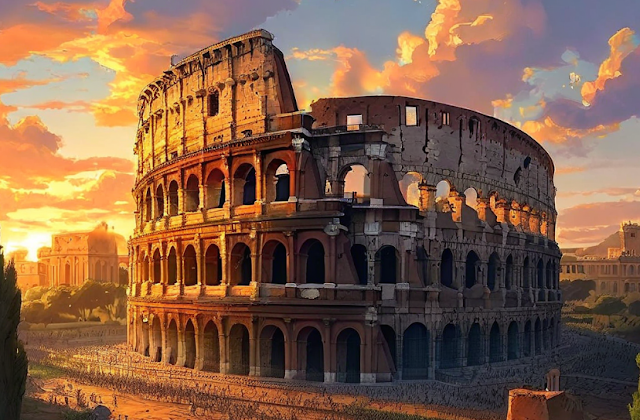
🏛️ How Old is the Colosseum? Uncover the Secrets of Ancient Rome!

When we think of ancient Rome, the mighty Colosseum instantly comes to mind. But exactly how old is the Colosseum? Let's journey through time and reveal the fascinating history behind one of the world’s most iconic structures.

🏛️ How Old is the Colosseum?


📜 The Birth of the Colosseum: A Gift to the Roman People

The Colosseum, also known as the Flavian Amphitheatre, began construction in 70 AD under Emperor Vespasian. It was later completed in 80 AD by his son, Emperor Titus, with final touches added during the reign of Emperor Domitian.

This means that the Colosseum is nearly 2,000 years old — a staggering testament to Roman engineering! Built on the site of Emperor Nero’s former palace, the Colosseum was a grand symbol of Rome’s shift from tyranny to a republic that honored its people.


🏗️ How Long Did It Take to Build the Colosseum?

The construction of the Colosseum took roughly a decade. It was a massive project requiring thousands of workers, including skilled Roman engineers, artisans, and slaves.

Interestingly, the Colosseum was built with a combination of travertine limestone, volcanic rock, and concrete — materials that have helped it withstand the test of time.


🎟️ What Was the Purpose of the Colosseum?

Once completed, the Colosseum became the epicenter of Roman entertainment. It could seat between 50,000 to 80,000 spectators who came to witness:

  • Gladiator battles

  • Wild animal hunts

  • Mock naval battles

  • Public executions

  • Dramatic reenactments

These grand spectacles showcased the might and wealth of the Roman Empire, solidifying the Colosseum's place in history.


⌛ The Colosseum Through the Centuries

Though the Colosseum has endured earthquakes, stone robbers, and even bombings during World War II, it remains a powerful symbol of resilience. Restoration efforts have kept its spirit alive, attracting millions of tourists every year.

Today, at nearly 2,000 years old, the Colosseum continues to tell the story of Rome’s glorious and tumultuous past.


🏺 Final Thoughts: The Colosseum is Timeless

So, how old is the Colosseum? Officially, it's around 1,945 years old as of 2025. But its grandeur feels eternal, as fresh and awe-inspiring today as it must have been to the Romans nearly two millennia ago.

If you ever get a chance to stand within its towering arches, you'll not just be visiting a site — you’ll be stepping into history itself.

☀️🌊 Météo Saint-Jean-de-Monts : Votre Guide Complet pour Préparer Votre Séjour

Nichée sur la côte vendéenne, Saint-Jean-de-Monts attire chaque année des milliers de visiteurs en quête de soleil, d’air marin et de détente. Pour planifier vos activités et profiter pleinement de vos vacances, il est essentiel de connaître la météo à Saint-Jean-de-Monts. Voici tout ce qu’il faut savoir !

☀️🌊 Météo Saint-Jean-de-Monts


🌦️📅 Prévisions Météo à Saint-Jean-de-Monts : À Quoi s’Attendre ?

La météo Saint-Jean-de-Monts est typiquement océanique, avec des étés doux et ensoleillés et des hivers humides mais modérés. Grâce à l'influence de l'Atlantique, le climat reste agréable toute l’année.

  • Été : Températures autour de 25°C, journées longues et ensoleillées ☀️

  • Automne : Alternance de soleil et de pluie 🌤️🌧️

  • Hiver : Doux, autour de 8-12°C, quelques averses 🌫️

  • Printemps : Temps frais et sec, idéal pour les promenades en bord de mer 🌸

Consultez régulièrement les prévisions météo Saint-Jean-de-Monts pour éviter les surprises !


🌊🏖️ Activités en Fonction de la Météo à Saint-Jean-de-Monts

La météo influence directement vos options de loisirs. Voici comment adapter votre séjour selon les conditions météorologiques à Saint-Jean-de-Monts :

☀️ Par Temps Ensoleillé :

  • Baignade et bronzette sur la plage 🏖️

  • Balades à vélo sur les pistes cyclables ombragées 🚴‍♀️

  • Marchés en plein air et dégustations locales 🧺

🌧️ Par Temps Pluvieux :

  • Visite de Thermes Marins Thalasso pour une séance bien-être 💆‍♂️

  • Musée Charles Milcendeau ou découverte du patrimoine local 🖼️

  • Shopping dans les galeries couvertes 🛍️


🌐📱 Où Suivre la Météo Saint-Jean-de-Monts en Temps Réel ?

Pour des données précises et actualisées, voici quelques outils utiles :

  • Météo France Saint-Jean-de-Monts (site officiel)

  • Applis comme Weather.com ou Météociel

  • Sites locaux avec webcams en direct 📹

Ajoutez des alertes météo pour recevoir des notifications en cas de changement brutal de temps !


🧳🌈 Conseils Pratiques : Comment S’habiller à Saint-Jean-de-Monts selon la Météo ?

Le secret ? La superposition ! Voici une petite checklist :

  • En été : lunettes de soleil, crème solaire, chapeau 🕶️🧴

  • En mi-saison : coupe-vent, chaussures fermées 🌬️

  • En hiver : manteau imperméable, écharpe et bonnet 🧥🧣

La météo peut changer rapidement, surtout près de l’océan. Il est donc judicieux d’avoir un plan B en cas de pluie.

🏛️ The City of Seven Hills: Unveiling the Timeless Majesty of Rome

Few cities evoke as much awe and reverence as Rome, the eternal City of Seven Hills. Known for its monumental history, vibrant culture, and architectural wonders, Rome stands as a living museum—blending past, present, and future. In this article, we dive deep into the origins, significance, and landmarks of this legendary city, celebrated across the globe.

🏛️ The City of Seven Hills


🗺️ What Are the Seven Hills of Rome?

The term City of Seven Hills refers to the seven legendary elevations upon which ancient Rome was founded. These seven hills are:

  • Palatine Hill (the oldest and most central)

  • Capitoline Hill

  • Aventine Hill

  • Caelian Hill

  • Esquiline Hill

  • Viminal Hill

  • Quirinal Hill

Each of these hills carries historical and mythological importance, forming the core of what would become one of the world’s most powerful empires. Today, these hills are part of the modern city, each boasting ruins, museums, gardens, and churches that attract millions of visitors annually.


🏛️ Historical Significance of the City of Seven Hills

The City of Seven Hills was more than just geography—it was destiny. According to Roman mythology, it was on Palatine Hill that Romulus founded Rome in 753 BCE. As the empire expanded, these hills became administrative, religious, and residential hubs.

  • Palatine Hill housed emperors and aristocrats.

  • Capitoline Hill was the political and religious center.

  • Aventine Hill became associated with the plebeians and monastic life.

The symbolic power of the Seven Hills of Rome is so strong that many cities later borrowed the name to signify prestige and historical richness.


🏰 Modern Rome and the Legacy of the Seven Hills

Modern-day Rome still honors its seven-hilled heritage. While urban development has blurred the original borders, you can still walk the hills and feel the layers of history beneath your feet.

Top Places to Explore:

  • The Roman Forum, nestled between Palatine and Capitoline Hills, is a must-see.

  • Aventine Hill’s Orange Garden offers panoramic views of the Vatican.

  • Quirinal Hill is home to the Presidential Palace.

Tourists are encouraged to plan a self-guided Seven Hills walk, which brings alive the ancient Roman spirit through every cobblestone and column.


🌍 Other Cities Inspired by the City of Seven Hills

Rome’s grandeur inspired other cities around the world to adopt the moniker City of Seven Hills, such as:

  • Lisbon, Portugal

  • Istanbul, Turkey

  • Amman, Jordan

  • Cincinnati, USA

But none can truly rival the original—a city that gave birth to Republicanism, Latin, and the blueprint for Western civilization.

You might also like