🕒 What Time Is It 24 Hours From Now? ⏳

Have you ever found yourself wondering, “24 hours from now is what time?” Whether you're scheduling an event, setting a deadline, or planning your day ahead, understanding how to calculate the time 24 hours into the future is essential. Let’s break it down and give you everything you need to know in this time calculation guide.

🕒 What Time Is It 24 Hours From Now? ⏳


🧠 What Does "24 Hours From Now" Actually Mean?

When someone says “24 hours from now,” they mean exactly one full day ahead of the current time. For example, if it’s currently 3:00 PM on a Tuesday, then 24 hours from now would be 3:00 PM on Wednesday.

This is a straightforward concept, but the real challenge often lies in time zone differences, AM/PM confusion, and daylight saving time shifts.


⏰ How to Calculate Time 24 Hours Ahead Manually 🧮

Here’s how you can do it without a calculator or a time app:

  1. Note the current time – For example, 9:45 AM.

  2. Add 24 hours to it – Since 24 hours make exactly one day, the time stays the same, only the day changes.

  3. Adjust for the date – If today is Monday at 9:45 AM, then 24 hours later will be Tuesday at 9:45 AM.

🔍 Pro Tip: If you want to calculate 48 hours from now, just go two days ahead at the same time.


🌐 Time Zones & Daylight Saving: The Hidden Factors ⏳

This is where things get a bit more complex. 24 hours from now might not always be the same time if a time zone or DST (Daylight Saving Time) change happens in between.

  • 🕑 In the U.S., daylight saving time can jump or rollback the clock by one hour.

  • 🌍 If you're coordinating internationally, 24 hours from your current time could be very different elsewhere.


🖥️ Tools That Can Help You Calculate the Time 🧭

Here are a few useful tools to instantly find out what time it will be 24 hours from now:

  • ✅ Google Search: Type "24 hours from now"

  • ✅ Online Time Calculators like Timeanddate.com

  • ✅ Voice Assistants like Siri or Google Assistant

🛠️ These tools take into account your local time, timezone, and any DST changes.


🔄 Examples of “24 Hours From Now” at Different Times of Day

Let’s look at a few real-life examples:

Current Time24 Hours From Now
6:00 AM6:00 AM (next day)
11:30 PM11:30 PM (next day)
12:00 Noon12:00 Noon (next day)
4:15 PM4:15 PM (next day)

📅 Why Understanding “24 Hours From Now” Is Important for Planning 📝

Knowing how to determine the time 24 hours from now can be crucial in many areas:

  • 🔔 Scheduling meetings

  • 📦 Tracking shipping times

  • ✈️ Booking flights

  • ⏱️ Time-sensitive project deadlines
💥 What Does RKO Stand For in WWE? Unmasking the Legend Behind the Move

When it comes to iconic finishing moves in WWE, few are as instantly recognizable—or devastating—as the RKO. Whether you’re a die-hard fan or a casual viewer, chances are you’ve heard the chant “RKO outta nowhere!” echo across arenas and social media. But have you ever stopped to ask: What does RKO stand for in WWE? 🤔

💥 What Does RKO Stand For in WWE?

Let’s dive into the origins, meaning, and legacy of this electrifying move and the Superstar behind it.


🎯 What Does RKO Stand For in WWE?

The acronym RKO stands for Randy Keith Orton, the full name of the WWE Superstar who popularized the move. Randy Orton, a third-generation wrestler, brought the RKO to the forefront as his signature finishing maneuver. This move has since become one of the most beloved and meme-worthy finishers in WWE history.

So to break it down:

  • R = Randy

  • K = Keith

  • O = Orton

The RKO is not just a move—it’s a brand, a statement, and a symbol of sudden defeat.


🧠 The Origin of the RKO Move in WWE

Although the RKO is unique to Randy Orton, it is actually a variation of a wrestling maneuver called the cutter. This type of move has been used by other wrestlers in the past (like Diamond Dallas Page's "Diamond Cutter"), but Orton’s version is executed with such speed and flair that it’s become his personal trademark.

The magic of the RKO lies in its spontaneity. Randy can hit it at any time, from almost any angle—making it one of the most unpredictable finishers in professional wrestling.


🦅 How the RKO Became a Viral Sensation

The RKO transcended the ring and entered pop culture through viral internet memes and videos. With fans editing clips of Orton “RKO-ing” unsuspecting people and animals in real-life scenarios, the phrase “RKO outta nowhere” became a global phenomenon.

This social media fame not only boosted Randy Orton’s profile but also brought a new wave of attention to the WWE product.


🏆 Legacy and Impact of the RKO in WWE

Over the years, the RKO has been responsible for countless victories and unforgettable moments in WWE. Randy Orton has used it to defeat some of the biggest names in the business, from John Cena to The Undertaker. It has helped him win multiple championships and solidified his status as one of the greatest of all time.

The RKO is more than just a wrestling move—it’s an era-defining weapon that has become synonymous with Randy Orton's legendary career.

🙏✨ God, I Wish That Were Me: The Meme That Echoes Across the Internet

The phrase “God, I wish that were me” has become one of the most iconic and relatable expressions on the internet. With roots deep in meme culture, it has transcended platforms like Tumblr, Twitter, and Reddit to become a shorthand for envy, yearning, and even ironic self-deprecation. Whether you’ve seen it used sincerely or sarcastically, the impact of this simple phrase is undeniable.

🙏✨ God, I Wish That Were Me


💻📈 Origins of God, I Wish That Were Me

The phrase “God, I wish that were me” first gained traction on Tumblr around 2014, where users would use it as a reaction to images or posts that showcased idealized, emotional, or highly romanticized moments. It later found a second life on Reddit, often used in comments where users are expressing envy or admiration for someone else’s experience—real or imagined.

The meme gained even more traction after being tied to a specific reaction image, usually featuring a sad anime boy watching something heartwarming or beautiful. That combination of longing and humor helped solidify the phrase in internet meme culture.


🧠💬 Why “God, I Wish That Were Me” Resonates So Strongly

One of the reasons this phrase is so viral is its emotional flexibility. Depending on the context, “God, I wish that were me” can express:

  • Sincere longing for love, comfort, or joy.

  • Ironic detachment from emotional vulnerability.

  • Dark humor around feelings of isolation or self-loathing.

  • Wholesome admiration for something beautiful or moving.

This range of expression has allowed it to thrive in multiple digital subcultures, from anime fandoms to leftist meme pages to normie meme accounts.


🖼️🌐 Visual Variants and Cultural Evolution

The meme has evolved through countless visual remixes, often using characters from anime, video games, or even celebrity reaction photos. The phrase has also become a common Twitter reply, used to comically downplay someone else’s big win or personal joy.

Some of the most popular formats include:

  • A melancholic figure observing a couple or family.

  • Parodies with Doomer Wojaks and Chads.

  • Captioned reaction GIFs or screenshot memes.

Its popularity and adaptability make it a lasting fixture in meme culture.


😭❤️ When Yearning Becomes a Joke (and a Truth)

What makes “God, I wish that were me” so enduring is how it captures that universal feeling of longing. We all have moments where we see someone else's happiness and think—even if just for a second—“I wish that were me.” The addition of “God” at the beginning intensifies that sentiment, making it almost spiritual in its desperation.

It’s a meme, yes—but it’s also a tiny confession shared by millions.


🔮💡 Conclusion: The Meme That Became a Mirror

“God, I wish that were me” isn’t just a meme. It’s a digital sigh, a pixelated yearning, a four-word prayer for something better. It thrives because it’s honest, relatable, and sometimes just a little bit funny in how much it hurts. Whether you’re using it sincerely or ironically, you’re part of a collective that gets it.

And honestly?

God, I wish that were me.

✨ God, Grant Me the Serenity: A Deep Dive into Peace, Courage, and Wisdom

The famous “God, Grant Me the Serenity” prayer has comforted millions around the world. Though often associated with recovery programs like Alcoholics Anonymous, this powerful prayer for serenity transcends religious and personal backgrounds. It speaks to a universal human longing: the desire for inner peace, strength in adversity, and clarity in decision-making.

✨ God, Grant Me the Serenity


🕊️ What Is the Serenity Prayer?

The full version of the Serenity Prayer goes like this:

God, grant me the serenity to accept the things I cannot change,
Courage to change the things I can,
And wisdom to know the difference.”

Penned by Reinhold Niebuhr, an American theologian in the 1930s or 40s, this prayer distills profound spiritual insight into just a few lines. It’s been widely adopted by spiritual communities, therapists, and individuals seeking mental clarity and emotional balance.


🌱 The Meaning Behind "God, Grant Me the Serenity"

Let’s break down the meaning behind each phrase to understand why it holds such enduring power.

🙏 “God, Grant Me the Serenity…”

This opening phrase is a plea for serenity—a word that means more than just calm. It's a spiritual stillness, a deep acceptance that arises when we surrender control over what we cannot change. By asking God (or a higher power), we acknowledge our human limitations and seek divine guidance.

🛡️ “…To Accept the Things I Cannot Change”

Here lies the cornerstone of emotional maturity. Acceptance isn’t weakness—it’s wisdom. It means letting go of the struggle to change the past, other people’s choices, or uncontrollable circumstances. This line encourages letting go of resistance and embracing radical acceptance.

💪 “…Courage to Change the Things I Can”

Acceptance doesn’t mean apathy. The prayer immediately pivots to action. Courage is needed to take responsibility for what we can influence—our behaviors, our choices, our mindset. It’s about empowerment and resilience, especially in the face of adversity.

🧠 “…And Wisdom to Know the Difference”

This final line binds the previous two. Knowing what to fight for and what to release is the essence of discernment. It requires reflection, spiritual guidance, and often a lot of patience. It’s not easy, but it’s the key to a balanced life.


🌊 Why the Serenity Prayer Still Matters Today

In today’s fast-paced, high-stress world, the Serenity Prayer is more relevant than ever. It offers a framework for mental wellness, spiritual grounding, and self-growth.

Whether you’re facing relationship struggles, addiction, grief, or general anxiety, these words remind us that peace begins with acceptance, strength comes from action, and clarity comes through humility.


🌈 Applying the Serenity Prayer to Everyday Life

Here are practical ways to apply the Serenity Prayer to your daily life:

  • 🕯️ Start your day with the prayer to set your mental and emotional tone.

  • ✍️ Journal about what you can and cannot change.

  • 🎧 Use it during mindfulness meditation or guided prayer.

  • 💬 Recite it when faced with tough decisions or emotional overwhelm.

Remember: The goal is not perfection, but progress. This prayer gently reminds us of the power of intentional living.


🌟 Finding Serenity in a Chaotic World

The words “God, Grant Me the Serenity” aren’t just a prayer—they're a blueprint for living. In a world filled with uncertainty and noise, it helps us return to what truly matters: inner peace, personal responsibility, and the wisdom to navigate life’s complexities.

Whether you're spiritual, religious, or simply seeking a more balanced life, this timeless prayer offers a path to peace, one word at a time.

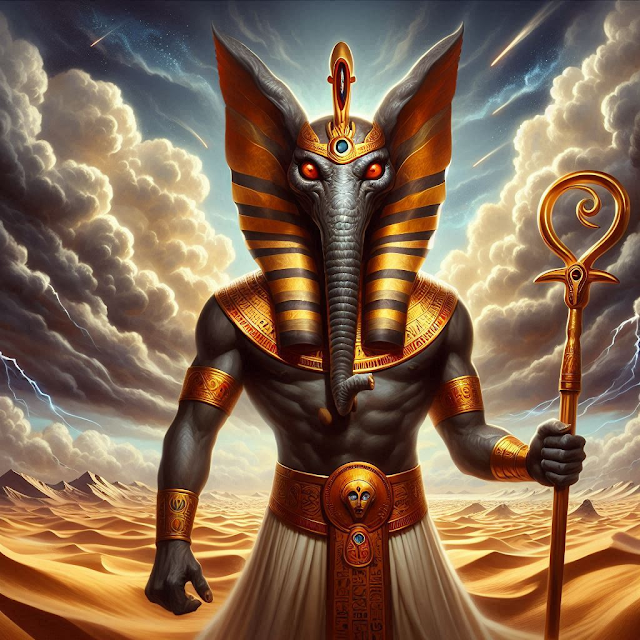
⚡ The Mythical Might of Seth, the Egyptian God of Chaos and Storms 🦂

When diving into the rich mythology of ancient Egypt, one cannot overlook the enigmatic and polarizing figure of Seth, also spelled Set. As the Egyptian god of chaos, desert storms, violence, and foreign lands, Seth played a crucial role in the cosmic balance between order and disorder. Often misunderstood, Seth was both a villain and a necessary force in the pantheon of Egyptian deities.

Seth, the Egyptian God


🦂 Who Is Seth, the Egyptian God of the Desert?

Seth is a prominent figure in Egyptian mythology, often associated with the desert, the scorching sun, and turmoil. He is the brother of Osiris, Isis, and Nephthys, and the uncle of Horus.

In myth, Seth is infamous for murdering his brother Osiris, which catalyzed one of the most important mythological conflicts: the battle between Seth and Horus for the throne of Egypt.


⚖️ The Battle Between Seth and Horus: Order vs. Chaos

After Seth killed Osiris, a bitter war broke out between him and Horus, Osiris’s son. This struggle, lasting over 80 years in the myth, was symbolic of the eternal fight between chaos (Seth) and order (Horus).

Eventually, Horus prevailed, becoming the rightful ruler of Upper and Lower Egypt, but Seth was not eradicated. Instead, he was often depicted as a necessary component of Ma’at (cosmic balance), showing that Egyptian mythology didn't see chaos as purely evil—it was something to be tamed and balanced.


🐾 The Iconography of Seth: The Mysterious Seth Animal

One of the most distinctive aspects of Seth is his appearance. He is usually depicted with the head of a unique, unidentifiable creature known as the Seth animal—a composite beast with a long, curved snout, squared ears, and a forked tail.

This mythical animal has baffled historians and Egyptologists for centuries. Some suggest it may represent an extinct creature or simply be a symbolic creation meant to represent foreignness and chaos.


🌪️ Powers and Domains of the Egyptian God Seth

As a god, Seth wielded immense power over storms, deserts, conflict, and foreign lands. In the later periods of Egyptian history, especially during the Hyksos and Ramesside dynasties, Seth even gained favor as a protector of the sun god Ra, battling the chaos serpent Apophis each night.

This duality—both destroyer and protector—made Seth a complex figure in the Egyptian pantheon. He was feared, but also revered for his strength and his role in defending cosmic balance.


🔥 Worship and Legacy of Seth in Ancient Egypt

Although demonized in some periods, Seth had numerous cult centers, particularly in Ombos (Naqada) and Avaris. During the Second Intermediate Period, the Hyksos, foreign rulers of Egypt, adopted Seth as their primary deity, associating him with their own gods of war and weather.

His worship waned over time as Horus and Osiris grew in popularity, and in later Egyptian and Greco-Roman writings, Seth became increasingly vilified—eventually equated with Typhon, the monstrous force of Greek mythology.


🧠 Understanding the Role of Seth in Egyptian Mythology

Rather than seeing Seth purely as a villain, it’s important to recognize his nuanced role in Egyptian theology. He embodied change, conflict, and the unpredictable forces of nature—all of which were essential parts of the Egyptian worldview.

His enduring myth reminds us that chaos, while dangerous, is also a necessary force for balance and renewal.

You might also like